- Apr 26
Violin harmonics-easy guide for beginners
- Meghan Faw
- 0 comments
In this post, you'll learn what both natural and artificial harmonics are, when to use them, how to recognize them in music notation, and how to play them.
What are harmonics?
Harmonics are frequencies that are positive number integer multiples (ie 1x, 2x, 3x etc) of the fundamental pitch. If that's a bit too science-y for you, I get it! A simpler definition is that harmonics cut the string into even pieces.
How to recognize harmonics in music notation
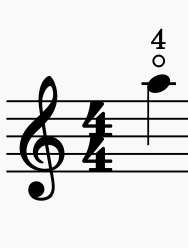
Natural harmonics are most often indicated by a "0" and another finger number, typically a 4, over the note.
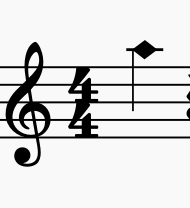
Natural harmonics can also be written with a diamond shaped note head.
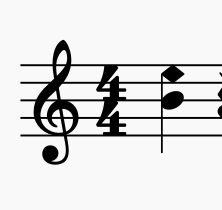
Artificial harmonics are written as two notes; the bottom one is a normal note and the top one is diamond shaped.
When to use harmonics
Harmonics generally have a very soft and airy sound, and they are sometimes used to increase the beauty and character of soft, lyrical lines. Additionally, natural harmonics can be used to "help" the player out by limiting shifts. Artificial harmonics are most often used for a virtuosic effect.
How to play natural harmonics
Do not press your finger down into the string; instead, lightly lay your finger on the string. I also recommend using a flat finger to play harmonics, rather than a curved one, as it increases the surface area on the string thus increasing your likelihood of placing your finger on the correct pitch to make the harmonic sound. Use a very fast bow speed.
How to play artificial harmonics
The bottom note requires a typical amount of finger pressure, while the top finger requires harmonic pressure.